Q-Learning Swarm Foraging Explained (2026): The Complete Multi-Agent Reinforcement Learning Guide
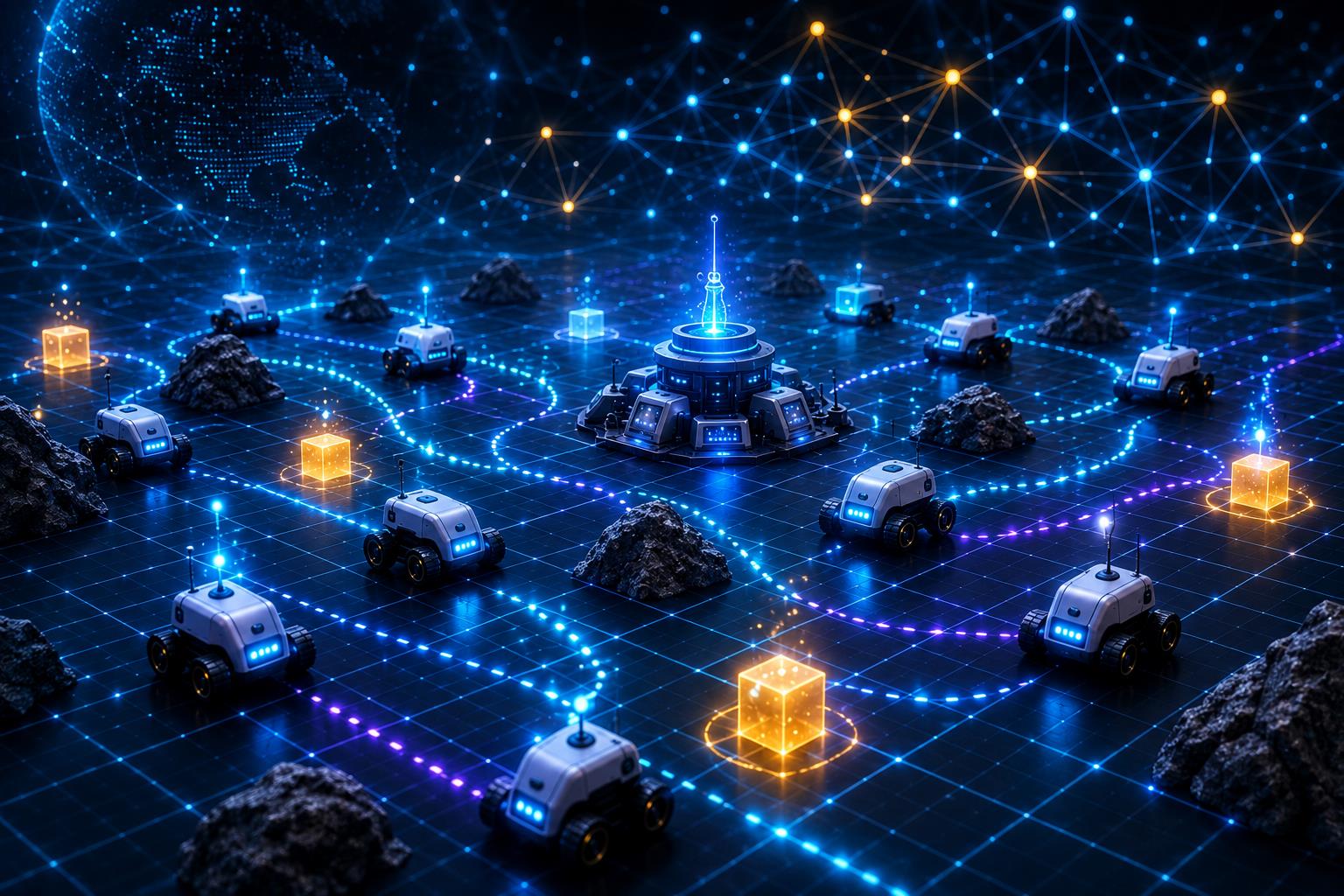
Quick Summary: Q-Learning Swarm Foraging is one of the most fascinating applications of Multi-Agent Reinforcement Learning (MARL). Inspired by ant colonies, bee swarms, and flocking birds, decentralized AI agents learn to cooperate, explore unknown environments, avoid collisions, and maximize collective rewards—all without a central controller.
What is Q-Learning Swarm Foraging?
Imagine watching thousands of ants searching for food. There is no king ant directing traffic, no GPS, and no central computer. Yet somehow, every ant seems to know exactly where to go. Some discover food, others carry it home, and others avoid crowded paths. Over time, the entire colony becomes remarkably efficient.
Nature has perfected decentralized intelligence over millions of years. Now imagine teaching robots to behave exactly like that. This is the core idea behind Q-Learning Swarm Foraging. Instead of programming every robot with explicit instructions, developers allow each individual agent to learn through experience. Every movement, collision, success, or failure becomes a lesson that gradually improves future decisions.
The result is a collection of independent agents that appear surprisingly intelligent when working together. This concept lies at the heart of Multi-Agent Reinforcement Learning (MARL)—one of the fastest-growing fields in artificial intelligence.
Unlike traditional machine learning models that focus on prediction, reinforcement learning teaches agents through trial and error. Each action earns a reward or penalty, and over thousands—or even millions—of interactions, agents discover strategies that maximize long-term success. When dozens or hundreds of these learning agents operate in the same environment, entirely new challenges emerge. That is where swarm foraging becomes both fascinating and incredibly difficult.
Why Multi-Agent Reinforcement Learning Matters
Training a single reinforcement learning agent is already challenging. Training fifty at the same time? That’s an entirely different game. Consider a simple maze. If only one robot is exploring, the environment remains predictable. Every action leads to a consistent outcome, and the robot gradually learns which paths are good and which should be avoided.
Now introduce twenty more robots, and suddenly everything changes. One robot blocks a corridor, another discovers the resource first, and another accidentally creates traffic. Every agent changes the environment for every other agent. Researchers call this non-stationarity. The world is constantly changing because every learner is also changing.
This makes Multi-Agent Reinforcement Learning significantly harder than traditional reinforcement learning. The challenge isn’t simply finding the shortest path; it’s finding the shortest path while dozens of other intelligent agents are making their own independent decisions at exactly the same time.
This mirrors many real-world situations, including:
- Warehouse robots delivering inventory
- Autonomous drone fleets
- Self-driving delivery vehicles
- Disaster response robots
- Agricultural harvesting machines
- Space exploration rovers
- Military reconnaissance systems
In each scenario, no single controller can realistically calculate every movement in real time. Instead, decentralized intelligence becomes the smarter, more robust solution.
Understanding Swarm Intelligence
Swarm Intelligence is inspired by biology. Nature provides countless examples of complex systems emerging from remarkably simple rules. Ant colonies discover the shortest routes to food, birds maintain perfect formation while flying, schools of fish instantly avoid predators, and bee colonies collectively choose new nesting locations.
None of these animals possess extraordinary intelligence individually. The magic appears when they work together. Artificial Intelligence researchers borrowed these principles decades ago, giving rise to algorithms such as Ant Colony Optimization (ACO), Particle Swarm Optimization (PSO), Boids Flocking Simulation, and Multi-Agent Reinforcement Learning.
Q-Learning Swarm Foraging combines the adaptability of Reinforcement Learning with the collective behavior observed in natural swarms. Instead of following pre-programmed rules forever, each agent continuously improves its own strategy through experience. This allows the swarm to adapt when obstacles move, resources disappear, or entirely new environments are introduced. That adaptability is one reason swarm intelligence is receiving renewed attention in robotics, logistics, and autonomous systems throughout 2026.
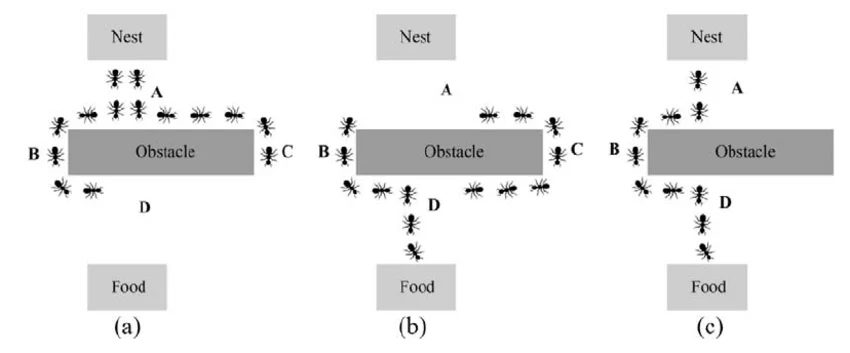 Nature inspired many of today’s decentralized AI algorithms.
How Q-Learning Works
At first glance, Q-Learning sounds intimidating. In reality, the idea is surprisingly intuitive. Imagine playing a brand-new video game. At first, you know nothing and press random buttons. Some choices earn points, while others lead to failure. Slowly, your brain starts recognizing patterns: “This path usually works,” “That enemy is too strong,” and “Opening this door always gives me better rewards.”
Without realizing it, you are building a mental table of good and bad decisions. That mental table is almost exactly what a Q-table represents. For every possible state, the AI stores the expected value of every available action. Each successful experience increases confidence, and each failure reduces it.
Over thousands of learning episodes, those values gradually converge toward an increasingly effective strategy. Unlike supervised learning, there are no correct answers provided in advance. The agent discovers them independently through interaction with its environment. This trial-and-error process is precisely what makes reinforcement learning so powerful—and why it remains one of the most exciting areas of artificial intelligence today.
Designing Better Reward Functions
If there’s one component that determines whether a swarm succeeds or fails, it’s the reward function. Even the most sophisticated reinforcement learning algorithm can produce poor results if the rewards encourage the wrong behavior.
Think of it like training a dog. Reward it every time it sits, and it quickly learns to sit. Reward it for barking, and you’ll get a very noisy companion. AI agents behave in much the same way. They don’t understand objectives like “work together” or “be efficient.” Instead, they optimize whatever behavior earns the highest cumulative reward. This means designing the right reward architecture is arguably more important than choosing the perfect algorithm.
The Problem with Individual Rewards
Imagine a warehouse containing ten autonomous robots searching for packages. If each robot only receives points for collecting packages itself, cooperation quickly disappears. Instead of spreading out, robots often compete for the same package because that is where the immediate reward is.
This leads to traffic congestion, frequent collisions, duplicate exploration, and wasted battery life, resulting in poor overall efficiency. Ironically, every robot may become better individually while the entire swarm performs worse. This phenomenon is common in Multi-Agent Reinforcement Learning and highlights why decentralized systems require carefully balanced incentives.
The Problem with Shared Rewards
Now imagine the opposite approach. Every robot receives exactly the same reward whenever any robot collects a package. At first glance, this seems like the perfect cooperative solution. Unfortunately, another problem appears.
Researchers often call this the lazy agent problem. Since everyone receives the reward anyway, some agents gradually stop contributing. Why search for resources when another robot will probably do the work? Over time, a few hardworking agents carry the entire system while others wander almost randomly. The swarm still functions—but far below its true potential.
The Hybrid Reward Strategy
Modern swarm systems usually combine both approaches. Agents receive personal rewards for their own achievements while also benefiting from collective success. This creates healthy competition without sacrificing cooperation.
A balanced reward function might look like this:
| Event | Reward |
|---|---|
| Resource collected | +10 |
| Any swarm member collects a resource | +2 |
| Successful delivery to base | +15 |
| Collision with another agent | -3 |
| Invalid movement | -2 |
| Every movement step | -0.1 |
This simple structure produces surprisingly sophisticated behavior. Agents begin spreading naturally across the environment, avoiding crowding, searching unexplored regions, and returning valuable resources efficiently. Most importantly, they continue helping the swarm instead of optimizing purely selfish behavior.
Why the Time-Step Penalty Matters
One of the smallest numbers in the reward table often has the biggest impact: the movement penalty. Imagine removing it completely. An agent could wander endlessly around the map with almost no consequences. Eventually, it might stumble upon a resource.
Technically, it would still learn, but learning would be painfully slow. Adding a tiny negative reward such as -0.1 per move encourages efficiency. Suddenly, every unnecessary step becomes slightly expensive, and the swarm starts discovering shorter routes naturally. This single adjustment often reduces training time dramatically.
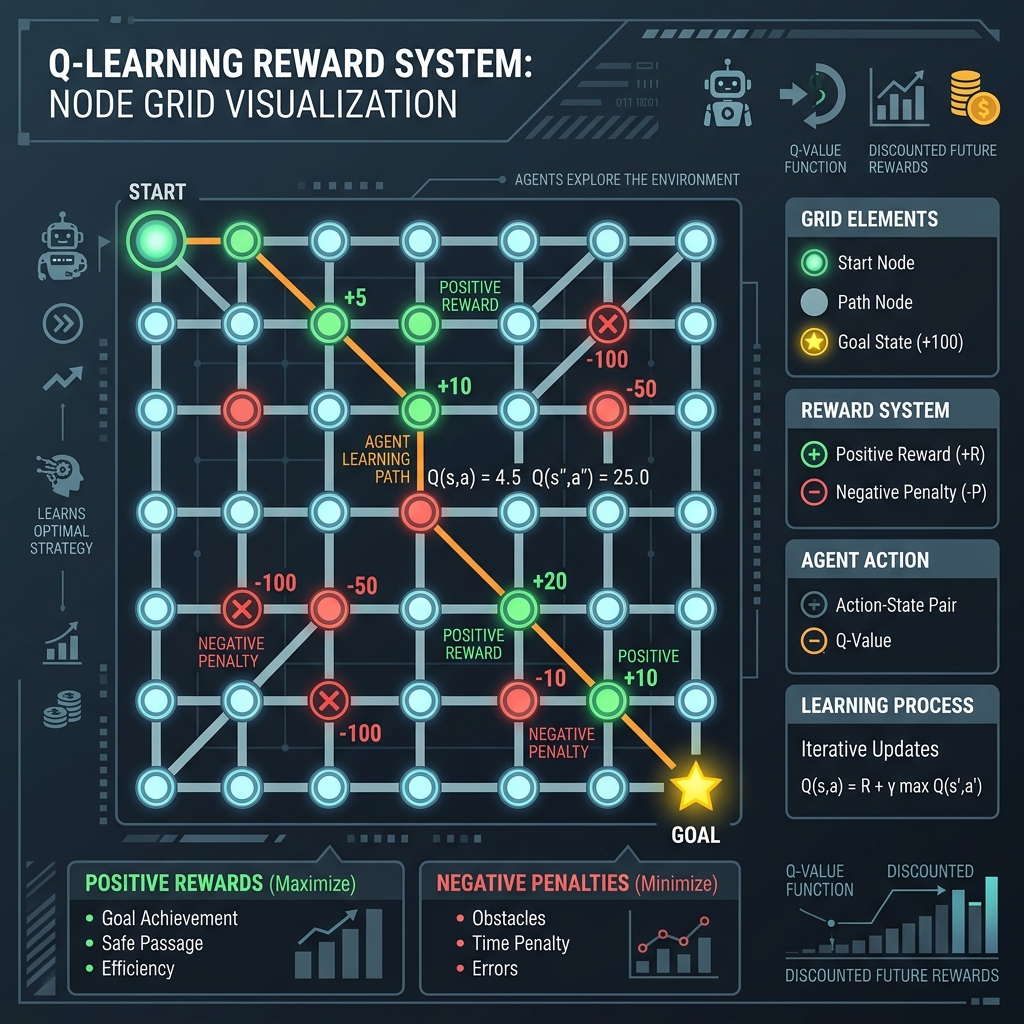 Carefully balanced reward functions encourage cooperation while preventing selfish or inefficient swarm behavior.
Hyperparameter Tuning: Small Numbers, Massive Differences
One of the biggest mistakes beginners make is assuming better hardware automatically produces better AI. In reality, your hyperparameters usually matter far more. Tiny adjustments to learning rate or exploration strategy can completely transform swarm behavior. Let’s examine the most important ones.
Learning Rate (Alpha)
The learning rate determines how quickly an agent replaces old knowledge with new experiences. A high alpha allows rapid adaptation, but in multi-agent environments, this often becomes unstable.
Remember that every other agent is also learning. If everyone updates their parameters too aggressively, nobody settles on a consistent strategy.
Recommended values:
| Environment | Alpha |
|---|---|
| Static grid | 0.20 |
| Dynamic grid | 0.10 |
| Large swarm | 0.05 |
Lower learning rates generally produce smoother convergence in decentralized environments.
Discount Factor (Gamma)
Gamma controls how much the future matters. A low gamma creates impatient agents that chase immediate rewards, while a high gamma encourages planning.
For swarm foraging, long-term thinking usually wins. Agents must explore, discover food, and eventually return home, meaning those future rewards matter. Gamma is typically set in the range of 0.90 – 0.98.
Epsilon-Greedy Exploration
Every reinforcement learning system faces a core question: should the agent try something new (exploration) or repeat what already works (exploitation)? Exploration helps discover better strategies, while exploitation maximizes existing knowledge.
A common approach starts with a high epsilon value (e.g. epsilon = 1.0), where the swarm behaves almost randomly. As training progresses, epsilon decays toward a low limit (e.g. epsilon → 0.05). This progression means agents gradually stop experimenting and begin exploiting their learned policies, which dramatically improves convergence.
Recommended Hyperparameters
| Parameter | Value |
|---|---|
| Alpha | 0.10 |
| Gamma | 0.95 |
| Epsilon Start | 1.00 |
| Epsilon End | 0.05 |
| Epsilon Decay | 0.995 |
| Episodes | 5000–10000 |
| Agents | 20–100 |
These values provide an excellent starting point for most grid-based swarm simulations.
Python Implementation Explained
One reason the swarm-foraging-qlearn repository has attracted attention is its clean implementation of decentralized learning. Each agent owns its own Q-table. No master controller exists, and every decision emerges from local experience.
A simplified training loop looks like this:
for agent in swarm:

    state = agent.get_state()

    action = agent.choose_action(state, epsilon)

    next_state, reward = environment.step(agent, action)

    best_future = np.max(Q[agent.id][next_state])

    old = Q[agent.id][state][action]

    Q[agent.id][state][action] = (
        (1-alpha) * old +
        alpha * (reward + gamma * best_future)
    )
Although the code is relatively short, it captures the essence of reinforcement learning. Each iteration consists of five steps: observing the current environment, selecting an action, executing it, receiving a reward, and updating future expectations. Repeat this process thousands of times, and intelligent behavior gradually emerges without explicit programming. This is why reinforcement learning continues to fascinate researchers—it allows complex behaviors to arise from simple mathematical rules.
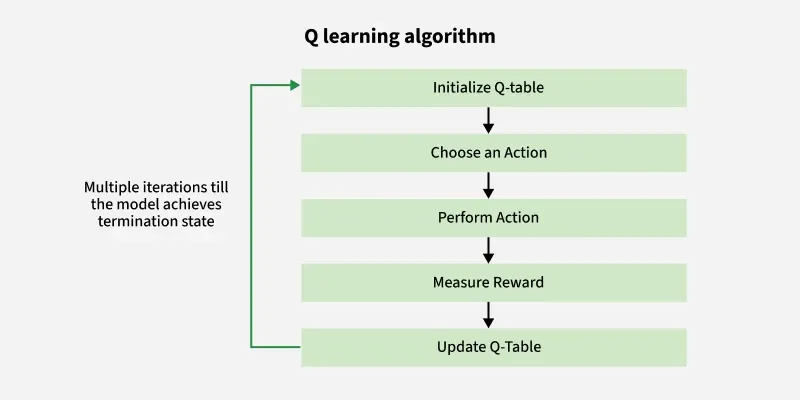 Every action updates the agent’s Q-table, gradually improving future decisions.
Real-World Applications of Q-Learning Swarm Foraging
One of the biggest misconceptions about swarm intelligence is that it exists only inside research papers and university projects. In reality, decentralized decision-making is already influencing industries around the world.
While many commercial systems combine multiple AI techniques rather than relying solely on classical Q-Learning, the principles behind swarm foraging remain highly relevant. Let’s explore where these ideas are making an impact.
1. Warehouse Automation
Modern fulfillment centers process millions of orders every day. Managing thousands of products manually would be impossible. Instead, fleets of autonomous robots transport inventory between shelves and packing stations.
Each robot must avoid collisions, find the shortest route, adapt to changing layouts, coordinate with nearby robots, and continue operating even if another robot fails. Although commercial systems often use advanced planning algorithms alongside reinforcement learning, the decentralized coordination problems closely resemble swarm foraging. The result is faster deliveries, lower operational costs, and significantly improved warehouse efficiency.
2. Drone Swarms
Imagine dozens of drones searching a forest after an earthquake. No single drone has complete knowledge of the environment. Each one explores a different region while continuously adapting to obstacles, weather conditions, and discoveries made by neighboring drones.
This is classic swarm intelligence. Potential applications include search and rescue, forest fire detection, wildlife monitoring, border surveillance, infrastructure inspection, and precision agriculture. As battery technology and onboard AI continue improving, coordinated drone swarms are expected to become increasingly common.
3. Autonomous Vehicles
Self-driving vehicles don’t exist in isolation. Every nearby vehicle affects traffic flow. Future transportation systems may benefit from decentralized coordination techniques where vehicles share information and collectively optimize traffic patterns. Researchers are actively exploring reinforcement learning approaches that could reduce congestion, improve fuel efficiency, and enhance road safety.
4. Agriculture
Large farms are beginning to deploy autonomous machines capable of monitoring crops, detecting disease, applying fertilizer, and harvesting produce. Instead of relying on one enormous machine, future farms may use hundreds of smaller robots working together.
This approach reduces fuel consumption, lowers soil compaction, provides greater fault tolerance, and allows for continuous operation. Swarm coordination allows these machines to divide work efficiently without requiring constant human supervision.
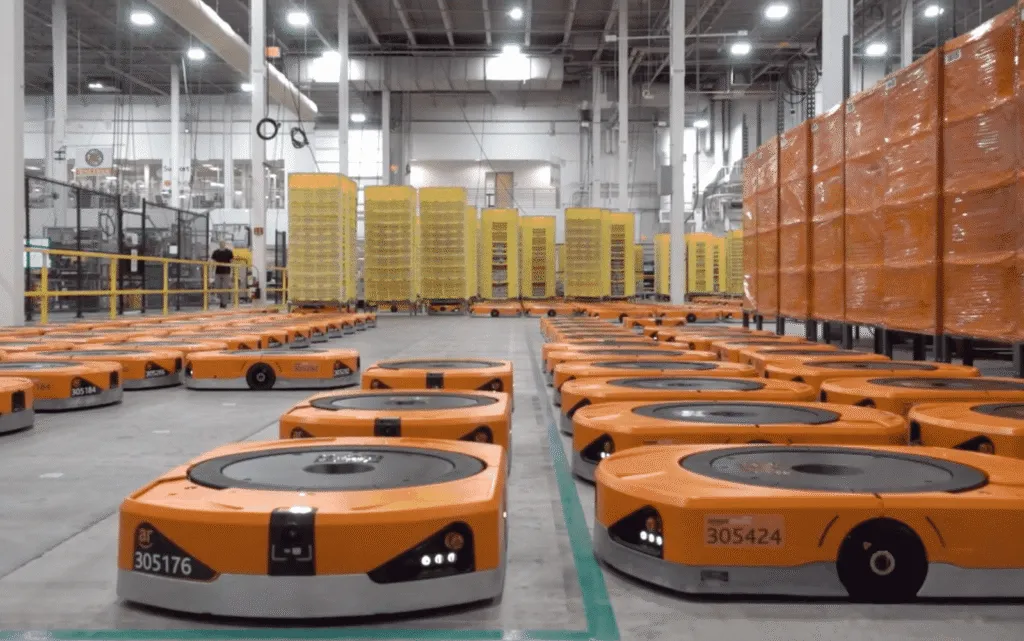 Swarm intelligence is already influencing warehouse automation and autonomous robotics.
Common Mistakes When Building Swarm AI
Even experienced developers can run into problems when implementing Multi-Agent Reinforcement Learning. Understanding these common pitfalls can save countless hours of debugging and experimentation.
Learning Too Fast
Setting a high learning rate often causes unstable behavior. Agents continuously overwrite previously learned knowledge before the swarm has time to converge. Reducing the learning rate generally produces smoother learning curves.
Ending Exploration Too Early
Many beginners decrease epsilon too quickly. While the agents appear to learn faster initially, they often settle into poor strategies and fail to discover better solutions later. Gradual exploration usually produces stronger long-term performance.
Poor Reward Design
An unbalanced reward function can unintentionally encourage undesirable behavior. Common examples include agents refusing to move, multiple robots competing for the exact same resource, robots endlessly circling the map, or one agent completing all tasks while others remain inactive. Reward engineering is often the most time-consuming and critical part of reinforcement learning.
Ignoring Environment Complexity
Testing only in simple grids can create misleading confidence. Real-world environments contain dynamic obstacles, random resource placement, communication delays, sensor noise, and partial observability. Introducing variability during training produces agents that generalize much better.
Q-Learning vs Deep Q-Learning
Although classical Q-Learning remains an excellent educational algorithm, modern AI systems often require approaches capable of handling enormous state spaces. Instead of storing every state-action pair inside a Q-table, Deep Q-Learning (DQN) replaces the table with a neural network that estimates Q-values.
| Feature | Q-Learning | Deep Q-Learning |
|---|---|---|
| Memory | Q-Table | Neural Network |
| Best For | Small environments | Large & complex environments |
| Scalability | Limited | Excellent |
| Training Speed | Faster | Slower |
| State Space | Discrete | High-dimensional |
| Typical Applications | Grid Worlds | Robotics, Games, Autonomous Driving |
For small swarm simulations, classical Q-Learning remains simple, transparent, and easy to debug. However, researchers often transition to Deep Q-Networks (DQN), Double DQN, or Proximal Policy Optimization (PPO) when tackling large-scale robotics or simulation environments.
Single-Agent RL vs Multi-Agent RL
Many newcomers wonder why Multi-Agent Reinforcement Learning is considered significantly more difficult than standard reinforcement learning. The answer lies in the environment.
When a single agent learns, the world behaves predictably. In a multi-agent environment, every other agent is also learning, which constantly changes the environment and its transition dynamics.
| Feature | Single-Agent RL | Multi-Agent RL |
|---|---|---|
| Learner Count | One learner | Multiple learners |
| Environment | Stable environment | Constantly changing environment |
| Convergence | Easier convergence | More difficult convergence |
| Coordination | No coordination required | Cooperation required |
| State Space | Smaller state space | Larger joint state space |
| Reward Functions | Simpler reward functions | Complex reward engineering |
This added complexity explains why MARL continues to be an active research area in artificial intelligence.
Best Python Libraries for Reinforcement Learning (2026)
If you’re interested in experimenting with swarm intelligence yourself, these open-source libraries provide an excellent starting point.
| Library | Purpose |
|---|---|
| Gymnasium | Standard single-agent Reinforcement Learning environments |
| PettingZoo | Multi-Agent RL environments and API standards |
| Stable-Baselines3 | High-quality pre-built RL algorithms (PPO, DQN, SAC) |
| RLlib | Industry-grade distributed reinforcement learning |
| NumPy | High-performance numerical and matrix computations |
| Matplotlib | Training visualization and metric plotting |
| PyTorch | Deep Reinforcement Learning neural network training |
| TensorFlow | Production neural network implementation |
These libraries allow developers to focus on experimentation rather than building every component from scratch.
Step-by-Step: Build Your First Swarm Foraging Simulation
If you’re just getting started, follow this simple roadmap.
Step 1: Define the Environment Grid
Create a 2D grid matrix (e.g. 20 × 20 Grid) with designated start/base cells and resource location coordinates.
Step 2: Initialize Agents
Spawn multiple autonomous agents (e.g., 10 robots). Give each agent a unique ID, start coordinates, and an independent Q-table.
Step 3: Set Resource Spawning
Randomly generate food resources at spawn points, and define rules for replenishment once a resource is consumed.
Step 4: Implement Actions
Map standard movement options to indices:
0: Up1: Down2: Left3: Right4: Stay
Step 5: Design the Reward Function
Code the state feedback loops:
- Food collection:
+10 - Successful delivery to base:
+15 - Collision with obstacles/agents:
-3 - Move step penalty:
-0.1
Step 6: Set Up the Training Loop
Run the simulation over a large number of epochs (e.g. Episodes = 10,000+), updating the local Q-table at each step using Bellman’s equation.
Step 7: Plot Learning Metrics
Visualize progress by plotting average reward, collision rate, resource count per episode, and episode lengths.
The Future of Swarm Intelligence
Swarm intelligence is rapidly moving beyond academic research. Over the next decade, advances in reinforcement learning, edge computing, robotics, and distributed AI are expected to make decentralized systems even more practical.
Emerging areas include autonomous delivery robots, ocean exploration vehicles, planetary rover teams, smart manufacturing, traffic optimization, disaster response, medical nanorobotics, and agricultural automation.
Researchers are also combining classical Q-Learning with Deep Reinforcement Learning, Graph Neural Networks, Transformer-based coordination models, and large language models to create even more capable multi-agent systems. Rather than replacing traditional reinforcement learning, these hybrid approaches build upon its foundations. Understanding Q-Learning today provides valuable insight into the future of intelligent autonomous systems.
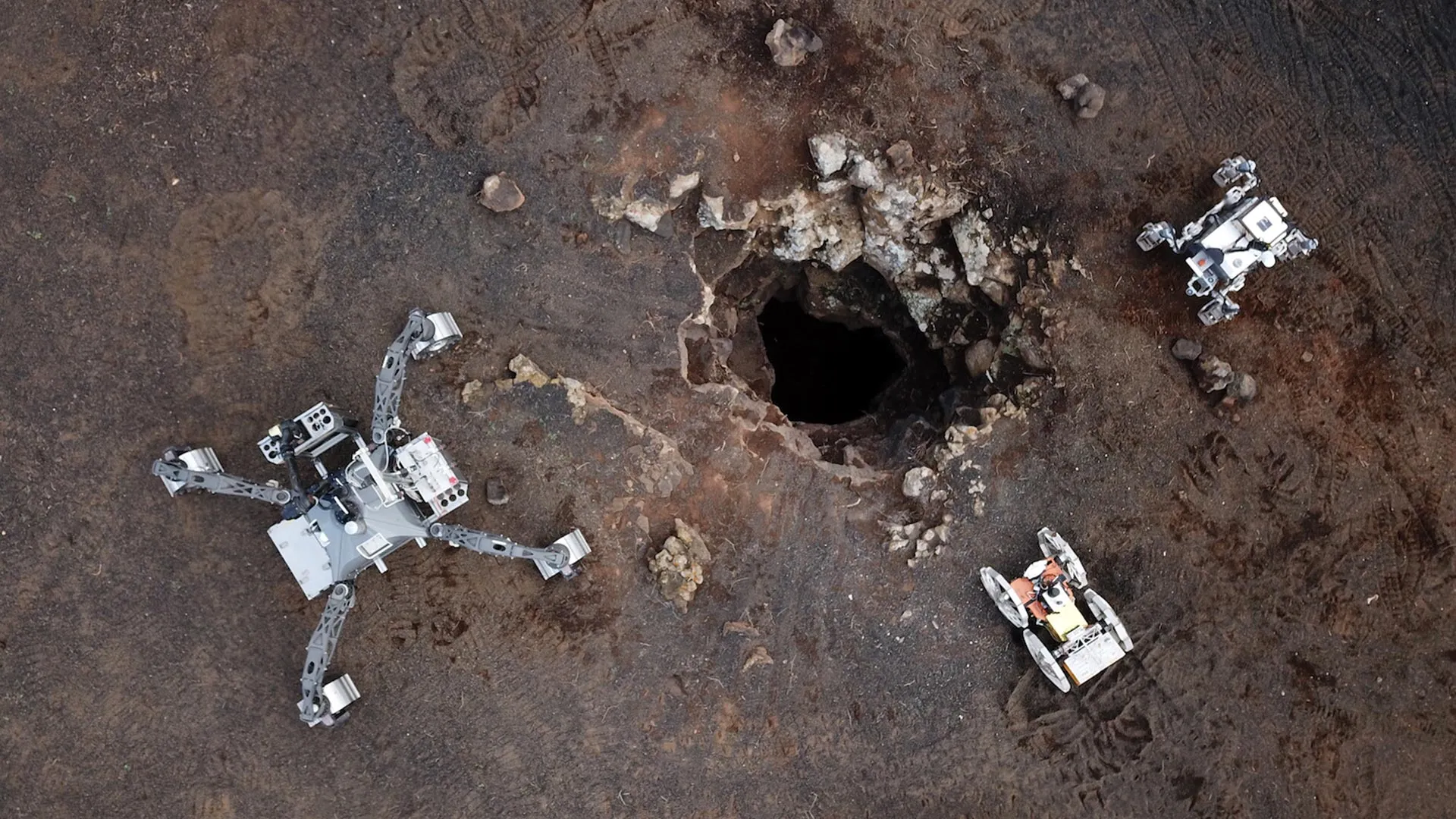 Future AI swarms could transform space exploration, disaster response, agriculture, and smart cities.
Key Takeaways
- Q-Learning Swarm Foraging teaches multiple AI agents to cooperate through trial-and-error learning.
- Reward design is often more important than the learning algorithm itself.
- Hybrid reward functions encourage both individual initiative and team collaboration.
- Carefully tuned hyperparameters dramatically improve learning stability.
- Decentralized learning improves fault tolerance and scalability.
- Swarm intelligence has practical applications in robotics, logistics, agriculture, autonomous vehicles, and drone fleets.
- Reinforcement learning remains one of the most promising fields in artificial intelligence research.
Frequently Asked Questions
What is Q-Learning Swarm Foraging?
Q-Learning Swarm Foraging is a Multi-Agent Reinforcement Learning approach where decentralized agents learn to locate, collect, and deliver resources while cooperating with one another through reward-based learning.
What is Multi-Agent Reinforcement Learning?
Multi-Agent Reinforcement Learning (MARL) extends traditional reinforcement learning by allowing multiple learning agents to interact within the same environment, making coordination significantly more challenging.
Why is reward design so important?
Agents optimize exactly what they are rewarded for. Poorly designed rewards often produce inefficient or unexpected behavior, while balanced reward functions encourage cooperation and long-term planning.
Does every agent share one Q-table?
Not necessarily. Many decentralized implementations maintain an independent Q-table for each agent, allowing them to learn unique strategies based on their individual experiences.
Can Q-Learning be used with deep learning?
Yes. Many modern systems replace traditional Q-tables with neural networks, resulting in approaches such as Deep Q-Networks (DQN) and more advanced multi-agent reinforcement learning architectures.
Where can I learn more?
Recommended resources include OpenAI Spinning Up, Gymnasium Documentation, PettingZoo Library, Stable-Baselines3, and the swarm-foraging-qlearn GitHub repository.
Related Articles
Continue exploring AI and automation on TrendForge: