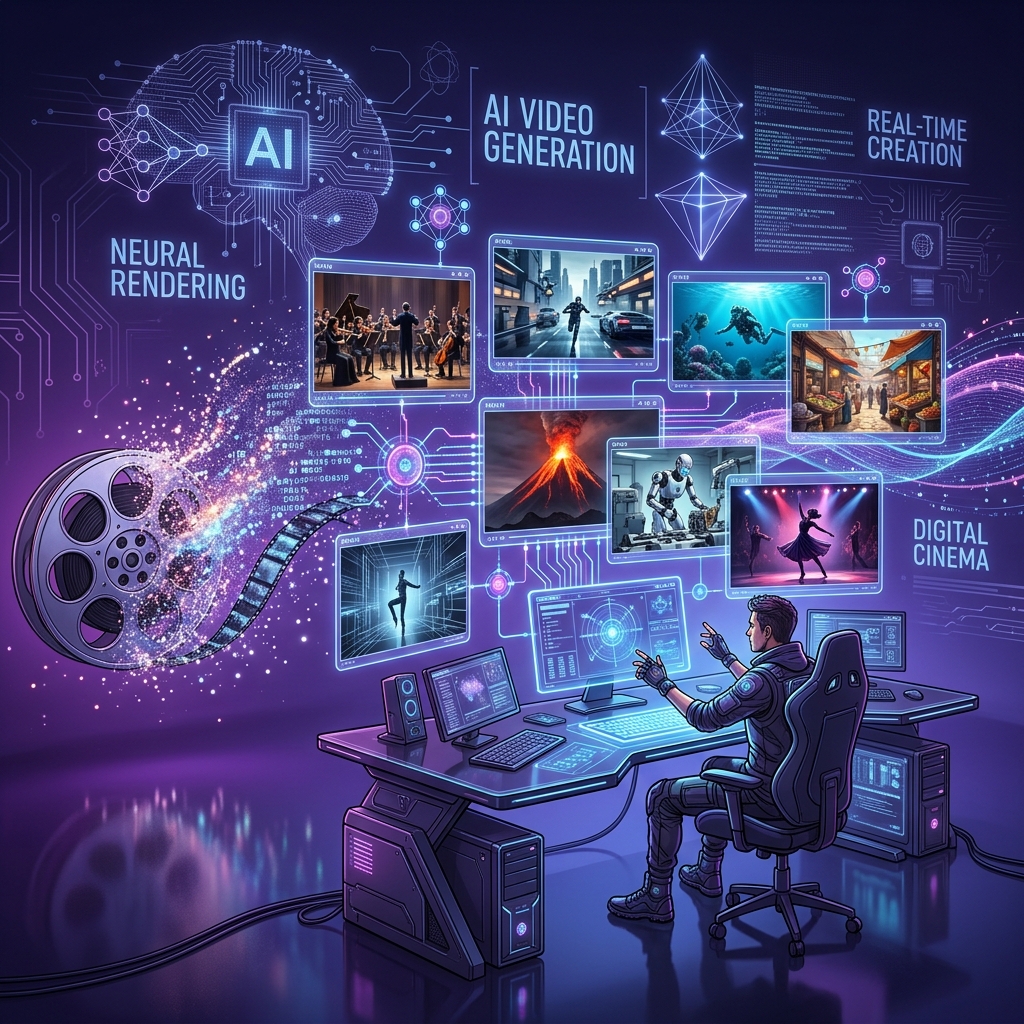
The Video Generation Revolution
OpenAI’s Sora has evolved dramatically. Version 2.0 produces videos that are increasingly difficult to distinguish from real footage, while also offering unprecedented creative control to users.
What’s New in Sora 2.0
The latest version introduces game-changing capabilities:
Photorealistic Output
The gap between AI-generated and real video has narrowed to the point where expert scrutiny is often required to tell the difference. Lighting, texture, and physics all behave coherently.
Extended Duration
Sora 2.0 can generate clips up to two minutes long while maintaining consistency in characters, setting, and narrative flow.
Precise Control
Users can now specify camera movements, lighting conditions, and even direct character actions with text prompts. This level of control makes Sora a practical tool for previsualization and concept work.
Implications for Creators
The impact across creative industries is significant:
- Filmmakers: Rapid storyboarding and previsualization
- Advertisers: Quick iteration on commercial concepts
- Game Developers: Cinematic cutscene generation
- Social Media: Personalized video content at scale
The Authenticity Challenge
As AI video becomes indistinguishable from reality, the question of digital authenticity becomes critical. Watermarking, detection tools, and content provenance standards are more important than ever.
Looking Forward
Sora 2.0 is not the endgame — it’s a glimpse of where we’re heading. Within the next few years, real-time AI video generation could fundamentally change how visual media is produced and consumed.